Canada has become one of the top destinations for international students because of its academic excellence, cultural diversity, and strong support through scholarships. A scholarship for foreign students in Canada can reduce the financial burden of tuition, living costs, and research expenses. However, the process requires careful planning since scholarships remain highly competitive. This guide covers scholarships in Canada for international undergraduate students, master’s, and doctoral levels, including federal, provincial, and university-based awards. It also explains eligibility, deadlines, application strategies, and the real meaning of “fully funded” offers.
Scholarship Types in Canada
International students have access to four main categories for graduate and undergraduate scholarships in Canada:
- Federal government awards: Highly competitive scholarships like Vanier and Banting.
- Provincial and territorial awards: Programs such as the Quebec PBEEE or Ontario Graduate Scholarships.
- University entrance and graduate awards: Automatic or application-based scholarships offered by top universities.
- Private and foundation awards: Scholarships from organizations such as the Mastercard Foundation or the Aga Khan Foundation.
Each type has unique criteria, and some require nomination from your institution.
Top Scholarships You Can Apply For Now
The following table gives a quick comparison of major opportunities:
| Award | Level | Value | Key Fit | Application Method | Deadline |
| Vanier CGS | PhD | $50,000/yr (3 yrs) | Leadership + research excellence | Institutional nomination | Oct–Mar |
| Banting Postdoctoral | Postdoc | $70,000/yr (2 yrs) | Postdoctoral research | Direct + supervisor support | Fall |
| Lester B. Pearson (Toronto) | UG | Full tuition + residence | Top academic & leadership record | School nomination | Nov–Jan |
| UBC IMES/OIS | UG | $10k–$25k/yr | Strong academics | Auto consideration | Jan–Apr |
| Montréal Exemption | UG/Master’s/PhD | Up to $27,300/yr | Merit | Direct | Rolling |
| Calgary International Entrance | UG | Up to $20,000 | Academic merit | Direct | Fall intake |
| Waterloo IMAE | Master’s | $2,500/term | Research-based Master’s | Department nomination | Term-based |
| York Global Leader | UG | $80k–$140k total | Leadership & academics | Direct | Fall entry |
| Quebec PBEEE | Grad/Postdoc | Up to $84,000 | Research excellence | Institutional nomination | Provincial deadline |
| Ontario Graduate Scholarship | Master’s/PhD | Merit stipend | University application | Direct | Each department has a different deadline. Visit the official site for the exact date. |
Claim: The value of a scholarship for international students in Canada can vary for different universities based on terms and conditions. Please visit the official sites for confirmation and read all terms and conditions before applying.
Federal Programs You Should Prioritize
Canada funds some of the world’s most competitive graduate awards.
- Vanier Canada Graduate Scholarships target top doctoral candidates who show leadership and academic excellence.
- Banting Postdoctoral Fellowships provide one of the highest stipends for postdoctoral researchers worldwide.
- Canada Graduate Scholarships–Master’s (CGS-M) supports research-based master’s students across disciplines.
- Pierre Elliott Trudeau Foundation Doctoral Scholarships fund doctoral students in social sciences and humanities.
These programs usually require an institutional nomination, so you must secure admission and departmental support early.
Provincial and Territorial Awards Worth Your Time
Each province manages its own merit-based scholarships.
- Ontario Graduate Scholarship (OGS): Available for both master’s and PhD students with a valid study permit. Awards are based on academic excellence.
- Quebec PBEEE Program: Grants large funding packages for international graduate and postdoctoral students.
- Other provinces, such as Alberta and British Columbia, offer graduate scholarships through universities, often tied to research performance.
Provincial programs often carry earlier deadlines than federal schemes.
University Scholarships at Canada’s Major Institutions
Most universities offer scholarships for international students in Canada in both undergraduate and graduate programs.
- University of Toronto: The Lester B. Pearson Scholarship is one of the most prestigious for undergraduates. Graduate students benefit from research funding and fellowships.
- University of British Columbia (UBC): Awards like International Major Entrance Scholarship (IMES) and Outstanding International Student (OIS) cover a wide range of undergraduate needs. Graduate students can access research-based assistantships and the UBC International Tuition Award.
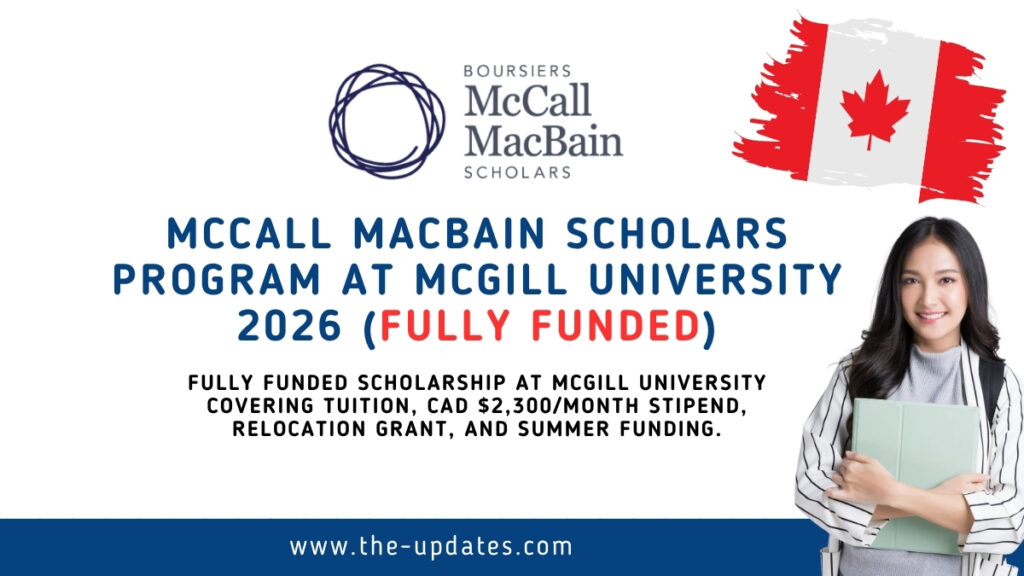
- McGill University: Entrance scholarships for undergraduates and graduate bursaries for postgraduates.
- University of Waterloo: Provides IMAE for master’s students and several entrance awards for undergraduates.
- Other universities: such as Calgary, Alberta, York, Queen’s, and Montréal, also provide generous awards targeting international students.
Private and Foundation Awards Open to International Students
Besides government and university funding, you can apply for private scholarships:
- Mastercard Foundation Scholarships (partner universities).
- Aga Khan Foundation International Scholarship Program.
- Rotary International and Anne Vallée Ecological Fund.
- MPOWER Global Citizen Scholarship.
- Surfshark Privacy Essay Award.
- Schlumberger Foundation Faculty for the Future (women researchers).
These scholarships for international students in Canada may focus on specific fields, regions, or leadership qualities.
Eligibility and Documents You Prepare
Most scholarships require:
- Excellent academic record.
- Proof of leadership or research experience.
- A valid Canadian study permit.
- Field or region-specific criteria.
Documents typically include: transcripts, CV, reference letters, research proposal (for master’s and PhD), English/French language proof, and a passport copy.
Deadlines and Nomination Rules You Track
Deadlines vary, but most fall between October and March for the following academic year. Many awards require nomination by your institution, so that internal deadlines may be earlier. Always check your department or faculty’s cut-off dates.
Student Expenses, Proof of Funds, and Work Rules
Even with a scholarship for foreign students in Canada, you must show proof of funds when applying for your study permit. For 2025, this means at least CAD $20,635 for living expenses, in addition to tuition.
Other costs include housing, food, books, and transportation, often ranging from $15,000–$20,000 annually. International students can work up to 24 hours per week during academic terms and full-time during breaks, which helps cover part of their living expenses.
Success Rates and What “Fully Funded” Looks Like
Fully funded awards remain rare. In most cases, you will combine partial scholarships, research assistantships, and part-time work. Programs like Vanier and Lester B. Pearson are fully funded but extremely competitive. For many students, partial funding covers tuition, while living expenses require additional support.
Where You Search and Apply
You should track opportunities through:
Avoid unreliable sites and always confirm details directly from the university or official government page.
Application Strategy That Works
To increase your chances:
- Start preparing early.
- Tailor your application to the award criteria.
- Secure strong referees and give them time to write.
- Write a clear research proposal if applying for a master’s or PhD.
- Apply broadly to multiple awards.
Awards You Can Skip as an International Applicant
Some awards only target Canadian citizens or permanent residents. Examples include the Loran Scholars Foundation Award and certain Terry Fox scholarships. Save time by focusing only on scholarships that accept international students.
FAQs
Do you need admission before applying?
Yes, most scholarships require you to hold an admission offer.
Can you apply from your home country?
Yes, you can apply before arriving in Canada, but you need to meet admission and study permit conditions.
Can you combine scholarships?
In most cases, yes, but some programs cap total funding.
How do automatic scholarships work?
Universities automatically consider you for entrance awards once you apply for admission.
How to apply for a scholarship in Canada?
To apply for a scholarship in Canada, first secure admission or meet eligibility requirements, prepare documents like transcripts, references, and a study plan, then submit your application either directly online, through your university’s graduate unit, or by nomination, depending on the award.
How to apply for a scholarship in Canada for a master’s?
To apply for a master’s scholarship in Canada, gain admission to a program, prepare transcripts, references, and a study plan, and then apply through your university or nomination system, depending on the scholarship.

 Join Our What’sApp Channel for updates, guidance, and tips on the application process.