
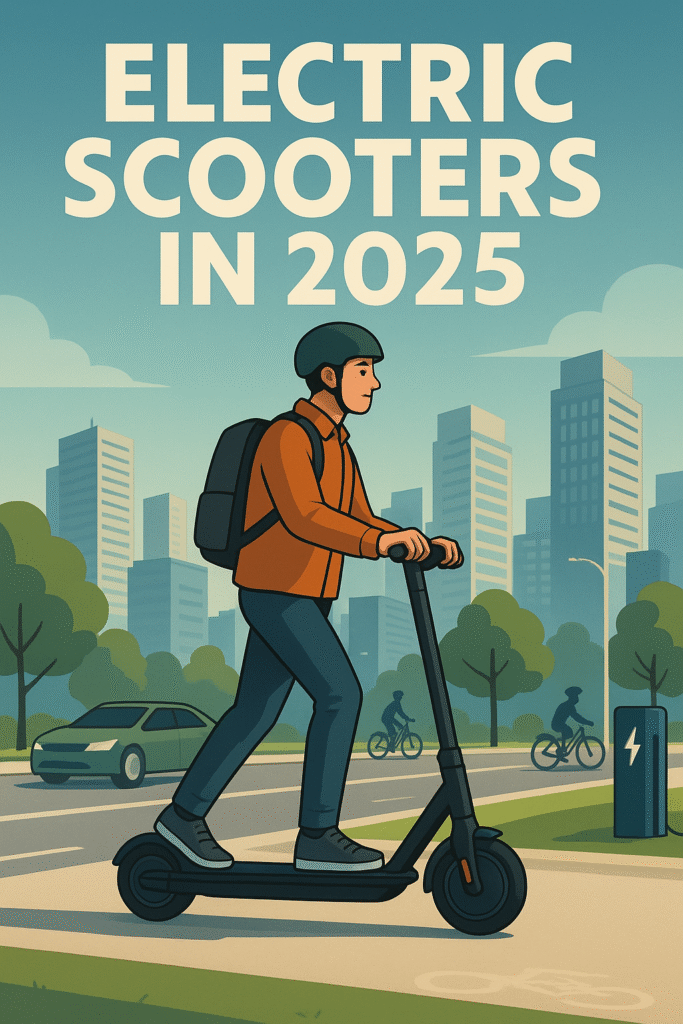
Electric scooters have shifted from being a passing urban trend to becoming one of the most practical, eco-friendly, and efficient personal transportation solutions. In 2025, their importance has only grown—fueled by rising fuel prices, improved technology, changing urban infrastructure, and the push for cleaner cities.
Whether you’re commuting to work, making quick errands, or simply looking for a fun way to get around, buying an electric scooter in 2025 is a decision that brings long-term benefits. This guide dives deep into why investing in one now is a smart move, what advantages they bring, and how to choose the right model for your needs.
1. Electric Scooters Are More Advanced Than Ever
Five years ago, electric scooters were limited by short ranges, slow charging, and questionable durability. Fast-forward to 2025, and we now have powerful motors, advanced suspension systems, and battery ranges exceeding 60 miles on some models.
Key advancements include:
- Longer battery life thanks to improved lithium-ion and solid-state battery technology.
- Better safety features, including integrated turn signals, ABS braking, and brighter LED lighting.
- Enhanced ride comfort with dual suspension and larger pneumatic tires.
- Weather-resistant builds for all-season riding.
These upgrades mean that scooters are no longer just for short, flat rides—they can now handle varied terrain, steeper inclines, and longer trips with ease.
2. Fuel Prices and Car Costs Are Rising
Owning a car is becoming more expensive every year. Between gas prices, insurance, parking, and maintenance, the average driver spends thousands annually.
In contrast, charging an electric scooter costs just a fraction of a fuel tank—often less than $0.10 per full charge. With rising energy efficiency, you can travel 20–40 miles for less than the cost of a cup of coffee.
For city dwellers, this is a game-changer. You save on:
- Fuel — No more paying for unpredictable gas prices.
- Parking fees — Scooters can be stored indoors or in small spaces.
- Maintenance — No oil changes, timing belts, or complex engine repairs.
Over a few years, an electric scooter can pay for itself simply by replacing short car trips.
3. Cities Are Becoming More Scooter-Friendly
Urban planning in 2025 is increasingly focused on micro-mobility lanes, charging stations, and bike-scooter integration. Many cities have introduced dedicated scooter paths and lowered speed limits in certain areas, making them safer for personal transport devices.
This shift means:
- Easier navigation through congested areas.
- Safer routes for riders away from heavy car traffic.
- More parking and charging options in public spaces.
Governments and local councils are also offering incentives for buying electric vehicles, including subsidies and tax deductions for scooters.
4. Environmental Benefits Are a Priority in 2025
Climate change remains a global challenge, and every small choice counts. Electric scooters are zero-emission vehicles—meaning they don’t release harmful exhaust gases into the atmosphere.
A typical gasoline car emits about 4.6 metric tons of CO₂ annually, while an electric scooter emits none during operation. Even considering manufacturing and electricity production, scooters have a far smaller carbon footprint.
By switching to an electric scooter:
- You reduce your personal environmental impact.
- You help lower urban air pollution levels, improving public health.
- You support sustainable transportation trends.
5. Convenience and Flexibility
One of the biggest draws of an electric scooter is door-to-door mobility. Unlike public transportation, there are no fixed schedules or routes. Unlike cars, there’s no need to hunt for parking.
Advantages include:
- Quick folding designs for easy storage at home or in the office.
- The ability to combine with public transit, carrying your scooter onto buses or trains.
- Last-mile coverage, allowing you to reach destinations that are far from bus stops or train stations.
Whether it’s a quick trip to a nearby café or a 10-mile commute, scooters adapt to your lifestyle.
6. A Cost-Effective Transportation Investment
In 2025, electric scooters are cheaper than ever for the value they provide. Entry-level models start under $400, while premium commuters with advanced features can cost $800–$1,500—still far less than even a used car.
When comparing costs:
- One year of commuting by scooter may be less than a single month of car expenses.
- Maintenance costs are minimal—mainly tire replacements and brake adjustments.
- Battery replacements are now more affordable and longer-lasting, often lasting 3–5 years.
For riders looking for more in-depth evaluations, websites like Electric Scooter Review provide unbiased comparisons and detailed performance insights.
7. Performance Is Meeting Real-World Needs
The stereotype of scooters being slow or fragile is gone. In 2025, many models:
- Reach top speeds of 25–40 mph.
- Climb hills with 20%+ inclines without issue.
- Support riders up to 300 lbs or more.
- Offer water resistance ratings (IPX4–IPX7) for rain-safe rides.
For example, the Xiaomi 4 Pro is a top choice for urban riders—its combination of strong battery life, comfortable design, and reliable braking system makes it a commuter favorite. You can check the full Xiaomi 4 Pro electric scooter specifications to see why it’s one of the most balanced models of 2025.
8. Encourages a More Active Lifestyle
While scooters are electric, they still encourage outdoor movement. Riding requires balance, light physical engagement, and coordination—unlike sitting in a car seat for hours.
Riders often report:
- Spending more time outdoors.
- Feeling more connected to their surroundings.
- Reducing stress from traffic and crowded public transport.
Plus, standing while riding can help with posture and muscle engagement, offering subtle health benefits over time.
9. The Social and Community Aspect
Scooters are more than a solo commute tool—they’re part of a growing micro-mobility culture. Many cities host group rides, community events, and eco-mobility initiatives that bring riders together.
Benefits include:
- Meeting like-minded people passionate about sustainable transport.
- Learning maintenance and riding tips from experienced riders.
- Participating in eco-awareness campaigns.
This sense of community helps keep riders engaged, informed, and connected.
10. Technology Integration in 2025 Scooters
The modern electric scooter is a smart mobility device. Many models now feature:
- Bluetooth app connectivity for tracking rides and battery usage.
- Built-in GPS for navigation and theft prevention.
- AI-powered performance adjustment for different terrains.
- Regenerative braking systems to extend battery life.
In short, your scooter can now sync with your smartphone, optimize itself for efficiency, and even help you locate it if stolen.
11. Great for All Ages and Lifestyles
Electric scooters in 2025 are designed for a wide audience:
- Students — Affordable, portable, and perfect for campus commuting.
- Office workers — Reliable for daily commutes and business errands.
- Delivery drivers — Efficient for short-distance deliveries in crowded cities.
- Recreational riders — Fun for weekend rides or sightseeing.
With adjustable handlebars, multiple speed settings, and varied weight capacities, there’s a scooter for everyone.
12. The Resale Market Is Strong
Even if you decide to upgrade after a couple of years, electric scooters hold their value well. Popular brands have active resale markets, especially for well-maintained units.
This means:
- You can recover a good portion of your initial investment.
- Upgrading to newer models is financially easier.
13. Safety Has Greatly Improved
In 2025, safety features have expanded beyond basic lighting and brakes:
- Dual-braking systems (disc + electronic).
- Bright 360° visibility lighting.
- Turn indicators integrated into handlebars or decks.
- Wider decks for better stability.
Riders also have access to better protective gear—lightweight helmets, padded jackets, and reflective clothing designed for scooter use.
14. Quiet, Comfortable, and Stress-Free
Electric scooters operate almost silently, reducing noise pollution and creating a more relaxed riding experience. Compared to the stress of sitting in bumper-to-bumper traffic, scooting is smooth, direct, and enjoyable.
You can:
- Avoid the frustration of rush-hour jams.
- Enjoy scenic routes and open spaces.
- Listen to music or podcasts (safely, at low volume) while riding.
15. A Future-Proof Investment
Micro-mobility is here to stay. With governments, tech companies, and urban developers investing heavily in this sector, buying an electric scooter in 2025 means aligning with future transportation trends.
As cities become more restrictive on car use—especially in downtown areas—having a personal electric vehicle ensures you stay mobile without relying on outdated infrastructure.
Final Thoughts: 2025 Is the Year to Ride
Electric scooters have evolved from niche gadgets into essential urban transportation tools. In 2025, their improved technology, cost-effectiveness, environmental benefits, and convenience make them an unbeatable choice for city living.
Whether you choose a high-performance commuter or a budget-friendly daily ride, the investment pays off in saved money, reduced stress, and a cleaner planet. If you’re still on the fence, explore expert recommendations through an Electric Scooter Review to find the model that suits your lifestyle best.