
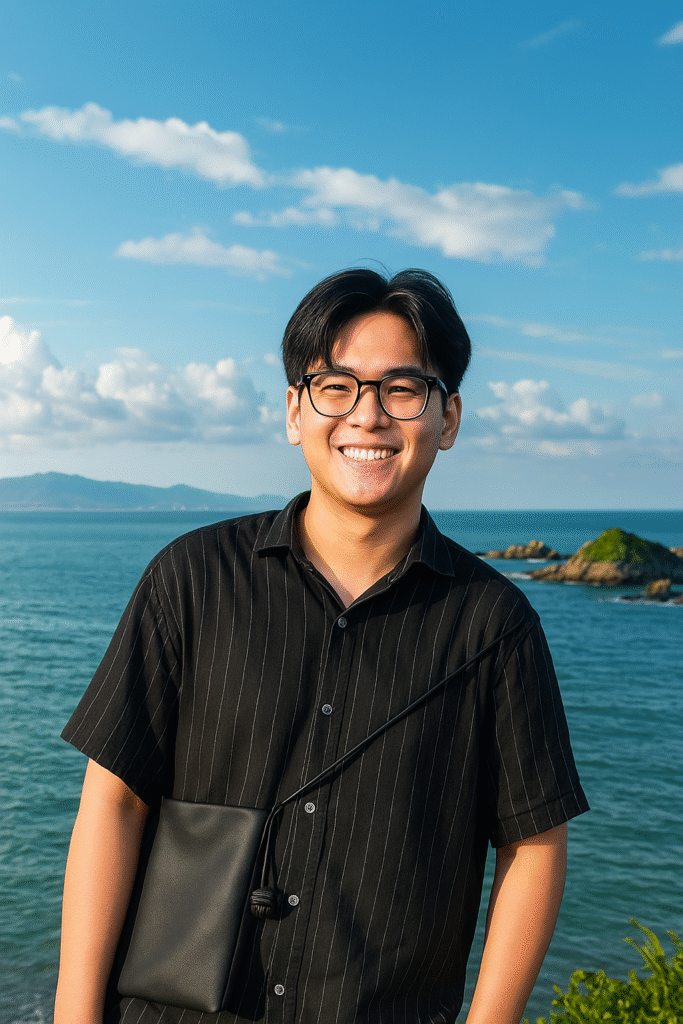
Hanoi, September 26, 2025 – A young Hanoi student who once specialized in chemistry has made a remarkable leap into the world of artificial intelligence, publishing seven scientific papers and securing a fully funded PhD scholarship in computer science worth nearly US$370,000 at the University of Illinois Urbana–Champaign.
At just 22, Nguyen Manh Duong recently graduated from the Hanoi University of Science and Technology (HUST) with a GPA of 3.94 out of 4 – among the highest in his class. Each year, only about 7–8% of HUST students graduate with distinction, and very few surpass the 3.9 mark.
Even before officially receiving his bachelor’s diploma, Duong had already secured his academic future. In March, he received an admission letter to the PhD program in computer science at Illinois, ranked 5th in the U.S. for computer science by U.S. News & World Report.
A Shift from Chemistry to Artificial Intelligence
Duong’s journey into AI was far from predictable. A graduate of the Hanoi National University of Education High School for the Gifted, he initially excelled in chemistry, winning a second prize at Vietnam’s national science and engineering competition. When he entered HUST in 2021, AI was still relatively new in Vietnam. But after researching its potential, he decided to change course.
Surrounded by classmates with stronger backgrounds in mathematics and computer science, he initially struggled. “I never studied just for grades. I always thought I had to study to really understand,” Duong said. That mindset pushed him to ask questions, seek answers independently, and consistently achieve top results—even in challenging courses such as calculus and statistics.
Balancing Academics and Campus Life
Beyond the classroom, Duong made his mark in student life. He served as deputy head of HUST’s events and programs club and even competed in the “Mr. & Miss HUST” contest, finishing as runner-up.
He also gained industry experience as an AI engineer intern but soon realized corporate life wasn’t for him. “Even though my grades were among the top in my class, I felt lost. Working for a company did not suit me, but I did not think I was capable enough for research either,” he recalled.
Breakthrough in Research
That changed in his third year when he reached out to HUST’s AIoT Lab. Although applications were closed, he emailed Associate Professor Nguyen Phi Le, then head of the lab, and was invited for an interview. The lab became a turning point.
“Research was much harder than coursework,” Duong admitted. “But with the guidance of Dr. Le and senior members, I adapted. She taught me patiently—from how to read a paper to knowledge that would have taken me years to figure out.”
His work focused on federated learning and medical AI. Within two years, he co-authored or led seven publications, including one presented at the prestigious International Conference on Computer Vision.
The Road to Illinois
When it came time to apply for graduate school, Duong set strict criteria: a top U.S. computer science program with strong research in medical AI. He submitted only one application—to Illinois—and spent three weeks preparing his portfolio, recommendation letters, and personal statement.
To his surprise, he was admitted with a full five-year funding package. “When I got the acceptance, I was overwhelmed. I honestly was not very confident, since I started research much later than many others,” he said.
Dr. Le praised him as one of three AIoT Lab students this year to secure a fully funded U.S. PhD before graduating. “He is an all-rounded student, with logical thinking, research ability, and soft skills,” she noted.
Looking Ahead
Duong flew to the U.S. last month, just weeks before receiving his bachelor’s diploma. While starting his PhD journey, he continues collaborating remotely with HUST’s AIoT Lab.
“I hope to publish collaborative research with HUST labs while studying in the U.S.,” he said, adding that he is also equipping himself with broader socio-economic knowledge to complement his scientific work.
From a chemistry student uncertain about his future to a rising AI researcher with global recognition, Duong’s story reflects both persistence and the growing ambition of Vietnam’s young scientists.