
Installing Stretch Ceilings can dramatically transform a room, giving it a sleek, modern look while hiding imperfections and offering practical benefits. However, the installation process requires skill and careful planning. Many homeowners and even some contractors make mistakes that compromise the ceiling’s appearance and durability. To ensure your stretch ceiling looks flawless and lasts for years, here are the most common installation mistakes and how to avoid them.
Poor Measurement and Planning
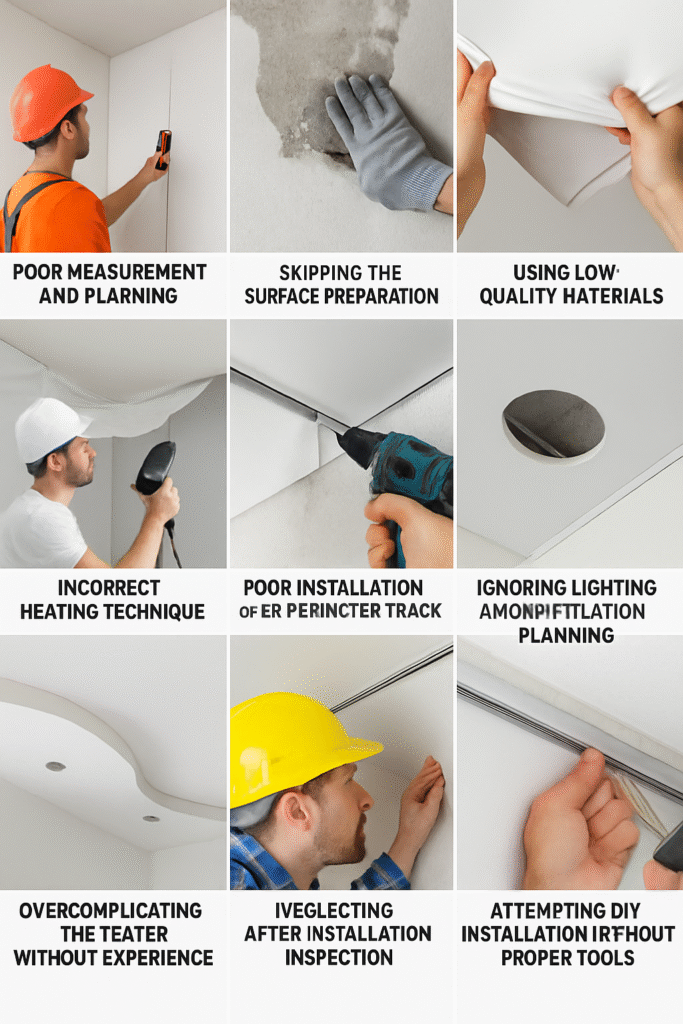
Accurate measurement is the foundation of a successful stretch ceiling installation. Incorrect dimensions can lead to wrinkles, sagging, or gaps along the edges. Always hire professionals who use precise laser measuring tools and consider all architectural features, including niches, pipes, and lighting fixtures.
Skipping the Surface Preparation
While stretch ceilings can cover imperfections, the underlying surface should still be clean and stable. Dust, debris, or loose plaster can interfere with the mounting track’s adhesion, causing future problems. Properly prepare walls and ceilings before starting the installation.
Using Low-Quality Materials
Not all stretch ceiling materials are created equal. Cheap membranes may be thin, prone to tearing, or have uneven coloring. High-quality PVC or fabric stretch ceilings ensure durability, vibrant color, and resistance to moisture and temperature changes. Invest in reputable brands for the best results.
Incorrect Heating Technique
For PVC ceilings, heating the membrane is crucial to make it elastic for stretching. Overheating or uneven heating can damage the material, while insufficient heating makes stretching difficult, resulting in wrinkles. Professional installers use controlled heating equipment to achieve perfect tension.
Poor Installation of the Perimeter Track
The aluminum or plastic track must be mounted perfectly level and securely. A crooked or loose track will ruin the ceiling’s evenness and can cause the membrane to detach over time. Ensure the installer uses proper tools and techniques to fix the track firmly.
Ignoring Lighting and Ventilation Planning
Failing to plan where lights and vents go before installation leads to costly adjustments later. Integration of spotlights, LED strips, and ventilation grids should be coordinated with the stretch ceiling design to avoid cutting mistakes or damage.
Overcomplicating the Design Without Experience
Multi-level ceilings, complex curves, or custom prints look stunning but require advanced skills. Attempting these without experience can lead to an unsatisfactory finish. Start with simpler designs and gradually move to more complex ones with professional help.
Neglecting After-Installation Inspection
Once the stretch ceiling is installed, a thorough inspection ensures no defects like bubbles, loose edges, or scratches remain. Any issues found should be addressed immediately while the installer is still on site.
Attempting DIY Installation Without Proper Tools
Installing a stretch ceiling requires special equipment and skills. DIY attempts often result in mistakes that can be costly to fix. Hiring certified installers guarantees a smooth, damage-free installation.
Failing to Follow Maintenance Recommendations
Even the best installation can be ruined by improper care. Follow manufacturer and installer guidelines for cleaning and maintenance to keep your ceiling looking perfect.
Conclusion
Avoiding these common installation mistakes will save you time, money, and frustration. A well-installed Stretch Ceiling enhances your space with elegance and durability. If you want to know more about choosing the right materials and installers, don’t hesitate to seek professional advice. Proper preparation and expert execution make all the difference for a flawless ceiling.